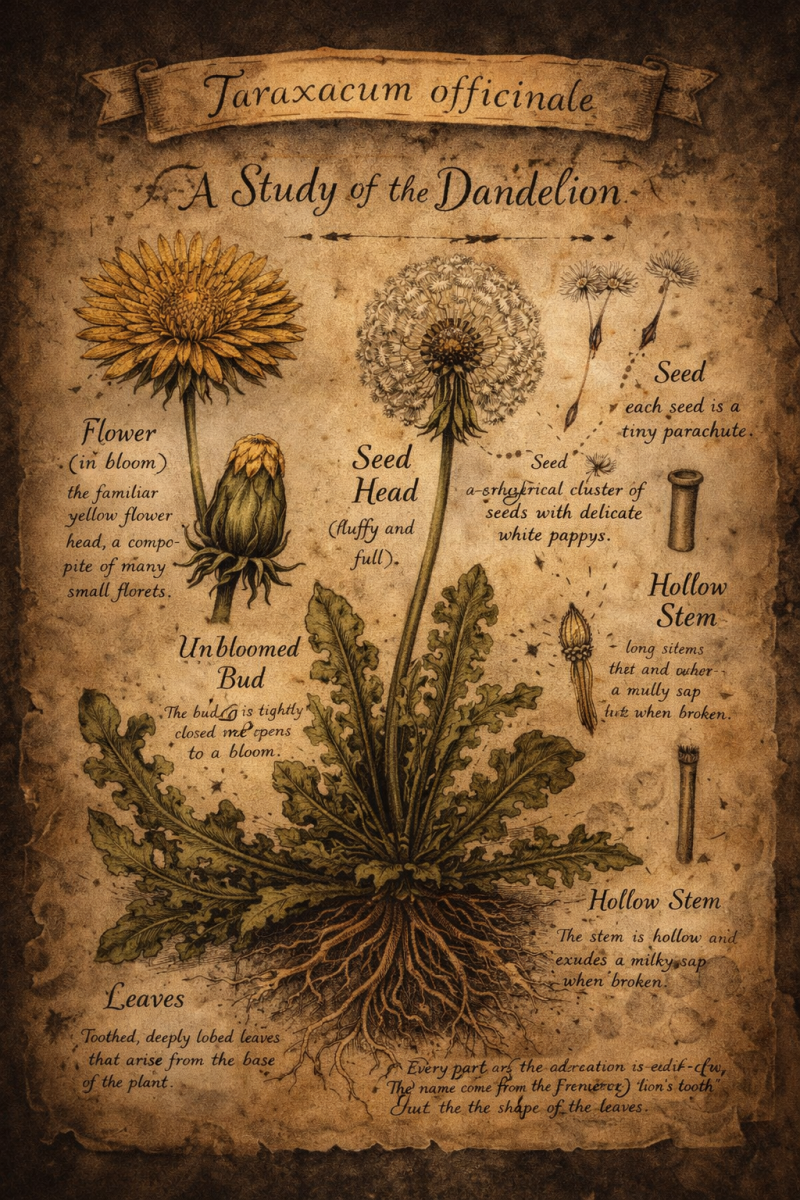
In old folklore, dandelions are not just weeds, but messengers from the realm of the Fae—sunlit companions said to bridge mortal soil with enchantment’s unseen edge. Where they grow, legend claims, the fairies have danced, leaving behind golden traces of their laughter.
It’s said that the yellow blossom is a fairy sun, and when it opens into a sphere of downy seeds, it becomes a tiny globe of wishes—a moon for mortal dreamers. The fae folk, fond of riddles and transformation, taught humans (so stories go) to blow the puffballs to carry their hopes into the ether. Each seed borne on the wind was a whispered petition to the unseen: a plea for love, luck, or safe passage through the unseen corridors of fate.
Children in older tales were warned not to pluck too many, for the dandelion is sacred to Tír na nÓg, the land of eternal youth. Too much meddling with their magic could draw a sly fairy’s attention—one might find themselves blessed with beauty or lost in a dream that would not end.
To the fairies, the dandelion is beloved for another reason: its unyielding nature. It thrives in cracks of stone and shadowed corners, where even sunlight is stingy. And so, it became a symbol of resilience and defiance, a reminder that beauty—like magic—finds its way into every forgotten place.
When twilight kisses the grass and the world hushes into silver, the old stories say that fairies gather beneath the dandelion’s halo, sipping dew laced with gold dust, weaving wishes into the soft night. And if you happen to see one—you must not speak. Just watch, and let the wind carry your own wish away.
It is for this resiliance the Dandelion has become the symbol of the children of U.S. Military Servicemen and women. For no matter where these children are blown to, they too are resilient, they grow strong and bright despite the challenges they must face.

The humble dandelion (Taraxacum officinale)—often scorned as a weed—is one of nature’s oldest and most generous healers. Across centuries and continents, herbalists, apothecaries, and midwives have prized every part of it: root, leaf, flower, and sap. Its golden crown hides a lineage of medicine—an herb of both purification and vital renewal.
Roots: The Purifiers
The dandelion’s deep taproot reaches far beneath the soil, drawing out minerals that many plants ignore. When dried and brewed into a decoction, the root acts as a gentle liver tonic and diuretic, helping the body rid itself of excess fluid and metabolic waste. It’s long been used to treat sluggish digestion, jaundice, and to “clear the blood,” as traditional herbal texts phrased it. Some practitioners liken its action to spring’s first thaw—stirring what has lain stagnant and restoring the flow of vitality.
Leaves: The Nourishers
Young dandelion leaves, bitter and sharp on the tongue, are rich in vitamins A, C, and K, as well as iron, calcium, and potassium. Consumed fresh in salads or brewed as tea, they act as a mild diuretic without depleting the body of nutrients—a rare trait among such medicines. Historically, they were prescribed for kidney ailments, skin eruptions, and to restore appetite after illness. Their bitterness is considered vital in traditional European medicine, believed to “wake” the digestive system and kindle the body’s fire.
Flowers: The Bright Healers
Infused in oil, the flowers yield a soothing balm for stiff joints, sore muscles, and chapped skin. Herbalists say the flower carries the plant’s sunlight within it—its warmth said to dispel melancholy. Dandelion wine, made from these blossoms, was an old remedy for the spirit, sipped to ease sorrow and rekindle joy in the heart.
Milk and Myth: The Bittersweet Elixir
The milky sap that exudes from a broken stem—known as latex—was once dabbed on warts and calluses as a folk cure. And in older herbal lore, this white fluid symbolized balance between poison and cure, life and decay. Its careful use reminded healers that medicine, like magic, depends always on measure.
In the language of old apothecaries, dandelion was called Herba Taraxaci—the plant that brings order to disorder. Modern herbalism still honors it as a cleansing ally for the liver and an herb of resilience. To drink dandelion tea in spring, they say, is to drink a piece of the sun’s patience—a reminder that what the world calls a weed may in truth be a healer in disguise.
Dandelion Tea
Dandelion tea is a herbal infusion crafted from various parts of the dandelion plant, scientifically known as Taraxacum officinale. This traditional rustic tea has been cherished for centuries, not only for its delightful taste but also for its benefits in herbal remedies. You can brew Dandelion Tea using the roots, leaves, or flowers, each imparting a unique flavor profile.
What Does Dandelion Tea Taste Like?
The taste of dandelion tea varies significantly depending on which part of the plant you choose. Roasted dandelion root tea offers a strong, rich flavor reminiscent of coffee, with a smoky aroma and toasty undertones, making it an excellent caffeine-free alternative to your morning coffee.
Dandelion leaf tea, on the other hand, presents a milder experience. It has an earthy, astringent flavor with a hint of bitterness, particularly noticeable in older, tougher leaves. However, young dandelion greens yield a much smoother drink. Generally, the leaves provide a subtle flavor, the flowers contribute a delicate sweetness, and the roasted roots mimic the taste of coffee.
Dandelion flower tea stands apart with its delicate, mildly sweet flavor, making it ideal for both hot and iced preparations. You can enhance it with a splash of citrus or a natural sweetener for an even more delightful experience. Overall, dandelion tea is a versatile beverage with a diverse range of flavors to explore.
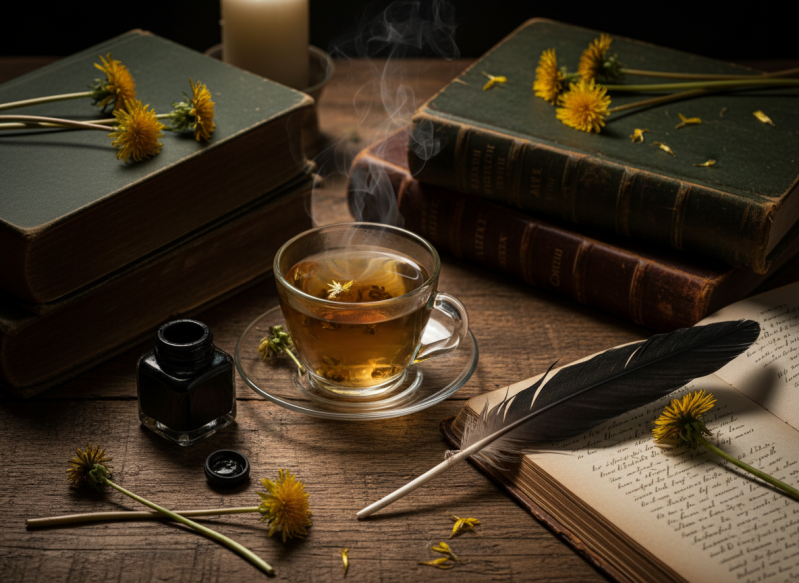

Dandelion Root Tea
Collecting And Roasting Your Roots
Discover an area that has been free from pesticides—we believe in starting with fresh roots! Chop them into small pieces to ensure even roasting and enhance their flavor. You can either place the roots in a 200-degree oven for 2 to 3 hours or sauté them in a pan over medium-high heat, either way you want them rich, toasty, browned color. Allow to cool and store in an air tight jar in a cool dark place.
Making the Tea
- 8 ounces water per cup
- 1 tablespoon of roasted dandelion root per cup
- optional - dash of cinnamon or nutmeg, or a bit of vanilla bean
- optional - milk of your choice
- optional - honey, sugar or sweetner of your choice
- Bring water to a boil, add dandelion root (and optional vanilla bean if so desired) and simmer 20 minutes.
- Pour the tea into a cup through a fine-mesh strainer and serve it up warm.
- Add optional cinnamon or nutmeg, milk and sweetner of choice and serve.
Dandelion Leaf Tea
Collecting and Preparing the Leaves
Only pick young tender dandelion leaves, old dandelion leaves will produce a stronger bitter tea. Rinse with cool water and pat dry so all that excess moisture doesn't water down your tea. You can choose at this point to dry them for use later or use them fresh. To dry, lay then out on a screen until thoroughly dried, and easily crumbled. When thoroughly dried, store in a air tight jar in a cool dark place. To use your leaves fresh, cut the leaves into small pieces or gently muddle them so as to better release the flavors.
Making the Tea
- 8 ounces of water per cup
- 2 teaspoons dried Dandelion leaf or a handfull of fresh.
- Optional - honey or sweetner of your choice.
- Optional - splash of orange or lemon juice
- Optional - slice of ginger
- Bring the water to a boil.
- Pour over prepared leaves,(and optional slice of ginger if so desired) and allow to steep for 5-10 minutes, a longer brew time will result in a stronger flavor.
- Once it has reached its desired strength, strain through a fine mesh strainer into cups.
- Add optional Lime juice and sweetener of your choice. Serve hot or cold.
Dandelion Flower Tea
Collecting and preparing flowers
Choose the full yellow flowers, if they're too old the tea will end up tasting more herbaceous than floral. Place the flowers in a large bowl and rinse with cool water to get any dirt or insects out Remove the green calax, reserving only the petals, the green parts tend to make it bitter,
Making the Tea
- 8 ounces ofwater per cup
- About 10 Dandelion blossoms per cup of tea
- Optional - honey or sweetener of your choice
- Optional - Lime juice
- Pour one cup of hot water over the flowers and steep for 5 to 8 minutes.-Take a sip, if you want a bit more flavor, just let it steep for a bit longer.
- Add optional sweetener and lime juice. Serve hot or chilled over ice.