As the harsh grip of winter loosens and the days stretch longer, the earth begins to stir.
For those drawn to ancient traditions, the spring equinox marks a time of profound transition, March 19th the Spring / Vernal Equinox brings the earth into balance with Day and Night being perfectly equal. Often celebrated as Ostara, this festival of renewal and fertility is deeply rooted in Germanic and Anglo-Saxon history. However, when viewed through a Viking Age lens, the arrival of spring takes on a unique, rugged beauty—a time not just of blooming flowers, but of survival, victory, and honoring the ancient powers of the land.
The Origins of Ostara: A Germanic Goddess
The name "Ostara" (or Ēostre in Old English) comes to us primarily through the writings of the 8th-century English monk, Bede the Venerable. In his work The Reckoning of Time, Bede noted that the Anglo-Saxons called the month of April Eosturmonath, named after a goddess in whose honor feasts were held .
While there is no direct mention of a goddess named Ostara in the surviving Old Norse mythological texts (the Eddas), the 19th-century scholar Jacob Grimm argued in his Deutsche Mythologie that Ostara was indeed a pan-Germanic goddess of the dawn and spring. Her name shares a linguistic root with the word "East," symbolizing the rising sun and the returning light.
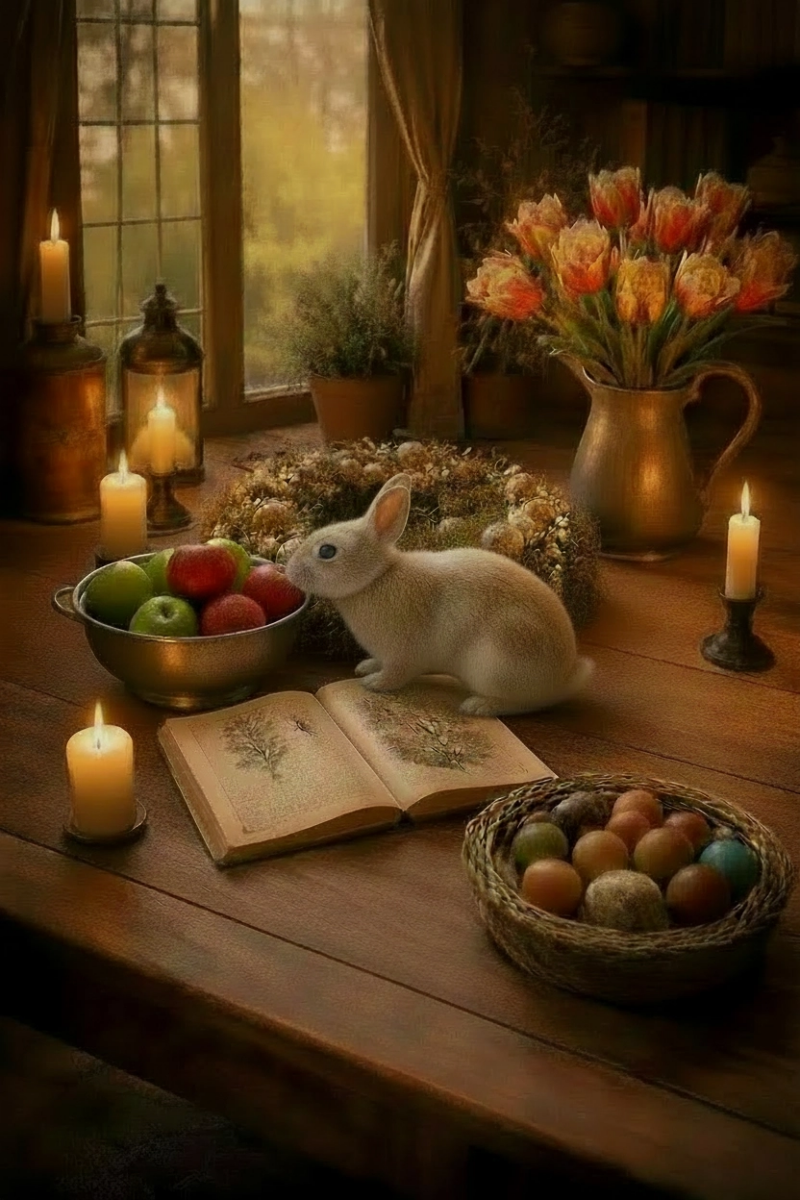
In the broader Germanic tradition, Ostara is the embodiment of spring. She is associated with the thawing of the frost, the mating season of animals, and the sudden burst of life. Her symbols—the hare and the egg—represent fertility and new beginnings, motifs that eventually found their way into modern Easter celebrations.
Spring in the Viking Age: The Hungry Gap and the Return of Light
To understand how the Norse viewed the coming of spring, we must look at their calendar and their reality. The Viking calendar was divided simply into two seasons: winter and summer. The transition between the two was a critical time.
Spring in Northern Europe was often referred to as the "Hungry Gap." It was a perilous period when winter food stores were running dangerously low, but the new crops had not yet grown, and the seas might still be too rough for fishing. Therefore, the arrival of spring was not merely a pleasant change in the weather; it was a matter of survival.
The Norse celebrated the transition to summer with specific blóts (sacrificial feasts) to honor the gods, seek protection, and ensure a bountiful harvest.
Key Nordic Spring Celebrations
Festival Timing Purpose and Focus
Dísablót March Full Moon / Spring Equinox A ritual honoring the dísir (female ancestral spirits and deities). I focused on fertility, protection, and the divine feminine power necessary for the earth's renewal.
Sigrblót April Full Moon (Start of Summer) The "Victory Sacrifice." Mandated by Odin's law, this blót marked the official beginning of summer. Offerings were made to Odin to ensure success and victory in upcoming raids and farming endeavors.
The Deities of the Nordic Spring
While Ostara may not be explicitly named in the Norse pantheon, the themes of spring, fertility, and renewal are powerfully represented by several key Norse deities.
Idunn: The Keeper of Youth
In Norse mythology, the goddess Idunn (Iðunn) is the true embodiment of spring and rejuvenation. She is the keeper of the magical golden apples that the Aesir gods must eat to maintain their youth and immortality.
The myth of Idunn's kidnapping by the giant Thjazi perfectly illustrates the Norse understanding of the seasons. When Idunn is taken away to the cold, mountainous realm of Jotunheim, the gods begin to rapidly age and wither, much like the earth during winter. It is only when Loki rescues her, transforming her into a nut to fly her back to Asgard, that youth and vitality are restored to the gods. Idunn's return mirrors the return of spring—a vital, life-saving force.
Freyr and Freyja: The Vanir of Fertility
The Vanir, a tribe of gods associated with nature, magic, and fertility, were central to spring worship.
• Freyr, the god of peace, prosperity, and the harvest, was heavily honored as the planting season began. Sacrifices, often of boars, were made to him to ensure good crops and fair weather.
• Freyja, his sister, is the goddess of love, fertility, and magic (seiðr). As the earth awakens and the mating season begins, Freyja's influence is felt throughout the natural world.
Celebrating a Nordic Ostara Today
Celebrating Ostara with a Nordic slant means blending the joy of the spring equinox with the reverence of the ancient blóts.
Here are a few ways to incorporate Nordic traditions into your spring celebrations:
1 Honor the Dísir: Take time during the equinox to honor the female line of your ancestors. Pour a libation of mead or ale onto the earth, thanking the dísir for their protection and asking for their blessing on the growing season.
2 Apples for Idunn: Instead of (or alongside) the traditional eggs, incorporate apples into your altar or feast. Eat an apple mindfully, reflecting on Idunn's gift of youth and the renewal of your own energy after the dark winter.
3 Prepare for "Victory": Use this time to set your intentions for the active months ahead. Whether your "raids" are new business ventures, creative projects, or personal goals, make an offering to Odin for wisdom and success.
As the wheel of the year turns, the Nordic perspective reminds us that spring is a hard-won victory over the dark and the cold. It is a time to feast, to honor the ancient spirits of the land, and to step boldly into the light of the returning sun. Hail the spring!